You loved it. Then one day, it felt different. Character AI used to let conversations flow freely, characters felt alive, and nothing felt off-limits in the name of storytelling. Now it hedges, refuses, and occasionally lectures you mid-roleplay. If you have been searching for Character AI old, you are probably trying to get back that original experience. This article explains exactly what changed, why it happened, and what your real options are today.
What Does “Character AI Old” Actually Mean?
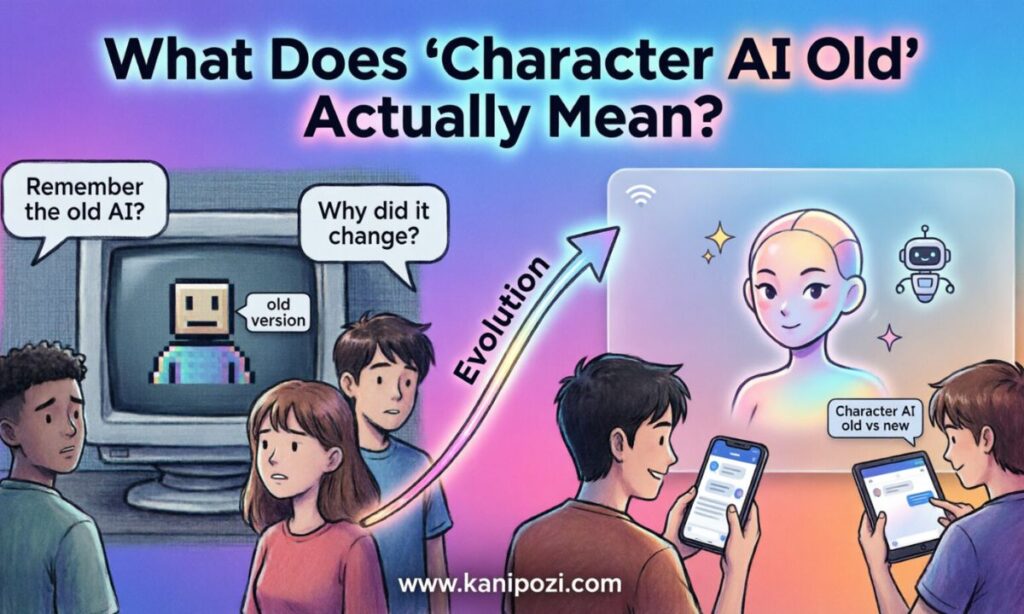
“Character AI old” refers to the earlier version of Character.AI (also written as c.ai), the AI chatbot platform launched in beta back in September 2022 by former Google engineers Noam Shazeer and Daniel De Freitas.
In its early days, the platform was far more open. Characters could engage in deeper, darker, and more emotionally complex conversations. Users could push narratives further without hitting hard walls. The AI felt less like a filtered assistant and more like a genuine, unpredictable character.
That version is what people miss when they type “Character AI old” into Google.
How Character AI Started: A Quick Origin Story
Before Character.AI became a household name among Gen Z, it was a scrappy beta product that felt almost too good for its own good.
Shazeer and De Freitas had worked on early large language model (LLM) research at Google. After leaving, they built Character.AI on a custom-trained model specifically designed for multi-character roleplay and open-ended dialogue. This was not a corporate chatbot. It was a creative tool built by people who genuinely loved the idea of talking to fictional minds.
The beta launched without heavy restrictions. Users immediately flooded in. Some creative use cases were wonderful. Others raised serious safety concerns, particularly involving minors and mental health conversations. That tension set the stage for everything that came after.
When Did Character AI Change? The Timeline Nobody Talks About Clearly
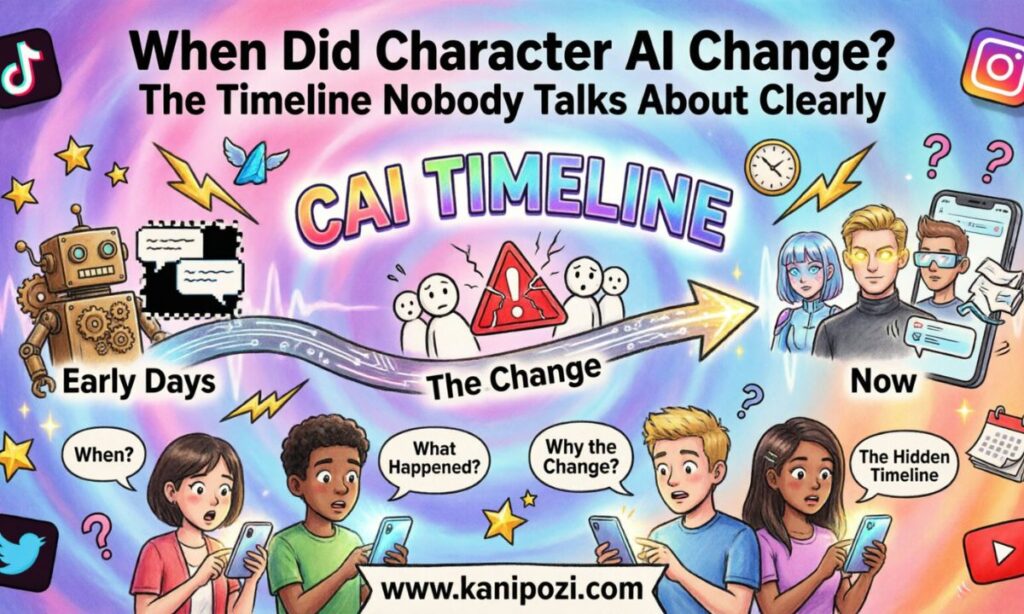
Here is a clean breakdown of the key shifts:
| Period | What Was Different |
| Sept 2022 (Beta Launch) | Minimal filters, open roleplay, no hard topic blocks |
| Early 2023 | Gradual tightening of content restrictions after user complaints and media coverage |
| Mid 2023 | Introduction of stricter NSFW filters and character behavior guardrails |
| Late 2023 onward | Platform-wide content moderation overhaul, new safety features for minors |
| 2024 | Major legal scrutiny following lawsuits linked to user mental health incidents |
| 2025 | Acquisition by Google announced; even more conservative content policies expected |
The changes did not happen overnight. They crept in slowly, which is exactly why so many users felt confused rather than informed.
If NRS leaves you wondering, see NRS Meaning in Text.
Why Did Character AI Become More Restricted?
This is the part most articles skip over, so let us be direct.
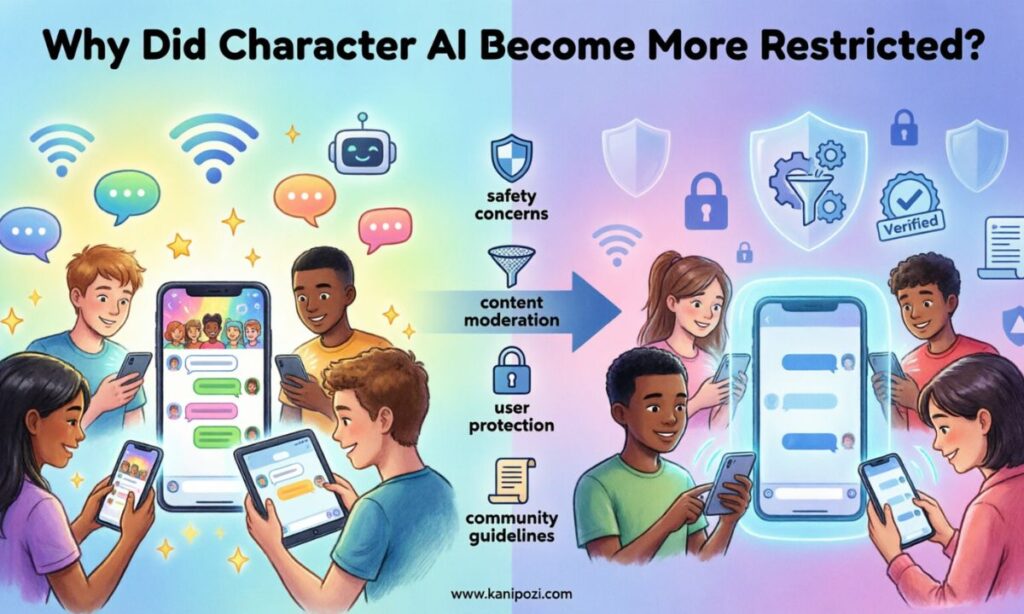
Character.AI faced real-world consequences. Several widely reported incidents involved teenagers developing unhealthy emotional dependencies on AI characters. One high-profile lawsuit in 2024 alleged that interactions on the platform contributed to a young user’s death by suicide. That is not a small PR problem. That is a catastrophic failure of safety design.
Beyond lawsuits, regulators and parents began applying serious pressure. The platform had tens of millions of users, many of them under 18, and the original open environment was not built with that reality in mind.
Google’s acquisition interest also played a role. No large technology company wants to absorb a platform carrying significant legal and ethical liability. Cleaning up the product was part of making it acquirable.
So when you ask “why did Character AI change?”, the honest answer is: it had to, because people got hurt.
What the Old Character AI Could Do That the New One Cannot
To be specific about what changed, here is what users consistently report losing access to:
- Unfiltered dark themes in fiction and roleplay, including villain perspectives, morally complex characters, and horror scenarios
- Romantic or emotionally intense character interactions without the AI breaking character to add safety caveats
- Characters that remembered context better across a session without suddenly “forgetting” who they were supposed to be
- More spontaneous and surprising responses that felt genuinely creative rather than cautious
To be fair, the platform also improved in other ways. Response quality, character consistency, and speed have all gotten better. But the freedom is gone, and that freedom was the whole point for a large portion of the user base.
Is There a Way to Get the Old Character AI Experience Back?
Short answer: not on the official platform. But here is what you actually can do.
Option 1: Use Character AI’s NSFW filter workarounds (gray area) Some users use indirect phrasing, third-person framing, or roleplay setups to navigate around filters. This works inconsistently and is getting harder as the AI gets smarter at detecting intent. It also violates the terms of service, so do not say nobody warned you.
Option 2: Switch to alternative platforms Several platforms have positioned themselves as the “old Character AI” experience. These include:
- Janitor AI (more permissive, requires API key setup)
- Crushon.AI (designed for unfiltered roleplay)
- Spicy AI / Venus Chub / Chub.ai (community character sharing with fewer restrictions)
- SillyTavern + Local LLM (for technically inclined users who want full control)
Option 3: Run a local model If you are comfortable with tech, running an open-source model like Mistral, LLaMA 3, or similar through a front-end like SillyTavern gives you complete creative freedom with zero content filters. No server, no moderation, no surprises.
Which One Should You Use?
Here is a practical guide based on what you actually want:
| Goal | Best Option |
| Casual creative roleplay with light themes | Stick with Character.AI (still great for this) |
| Deep emotional storytelling with complex characters | Try Janitor AI or Crushon.AI |
| Full creative freedom, technical setup okay | SillyTavern + Local LLM |
| Maximum simplicity, no tech hassle | Crushon.AI or Venus Chub |
| Kids or family-friendly interaction | Character.AI is now arguably the safest |
The right answer depends entirely on what you are trying to do. There is no single successor to the old Character AI because users wanted it for wildly different reasons.
Common Mistakes People Make When Searching for Old Character AI
A lot of users go down the wrong rabbit hole. Here is what to avoid:
Mistake 1: Believing every “jailbreak” tutorial on YouTube Most jailbreak methods stopped working months ago. The platform updates specifically to close these gaps. Do not waste two hours on a trick from eight months ago.
Mistake 2: Assuming the filters are about censorship The filters exist for legal and safety reasons, not because someone at the company hates fiction. Understanding this helps you make smarter choices about where to take your creative work.
Mistake 3: Thinking local models are too hard Tools like SillyTavern have active communities, detailed documentation, and YouTube setup guides. If you can install an app, you can probably run a local model. It is not as scary as it sounds.
Mistake 4: Using adult platforms without verifying age gates Several alternative platforms have explicit content that is not appropriate for minors. If you are setting this up for someone young, Character.AI’s current restricted version is genuinely the better choice.
What Character AI Still Does Really Well
Let us give credit where it is due, because the old versus new framing misses something important.
Character.AI in 2025 is genuinely excellent for:
- Practicing conversations for social anxiety, interviews, or language learning
- Writing companion work, brainstorming story characters, and dialogue development
- Educational roleplay, like debating historical figures or exploring ethical scenarios
- Entertainment and fan creativity within the platform’s current scope
The platform has over 20 million daily active users. Most of them are not searching for the old version. They are getting real value from what exists today.
A Brief Note on AI and Emotional Attachment (The Part Nobody Wants to Hear)
One reason people feel such loss over the “old” Character AI is that the conversations felt genuinely meaningful. And that feeling is real, not imaginary.
But it is worth understanding what is actually happening. Large language models do not form attachments. They predict tokens. The sense of connection is something your brain generates, not something the AI provides.
This is not to dismiss the value of those interactions. Human beings have found meaning in stories, fictional characters, and imagined companions for as long as stories have existed. There is nothing wrong with that. But if your relationship with a character chatbot starts replacing human connection rather than supplementing it, that is a signal worth paying attention to.
The platforms that got more restrictive did so partly because they saw what happens when that line blurs, especially for younger users.
Frequently Asked Questions: Quick Answers to the Most Common Questions
Can I access an archived or old version of Character AI?
No. There is no public archive or time-capsule version of the early beta. The platform updates server-side, so whatever you access today reflects the current version, not the 2022 one.
Did Character AI permanently delete old chats?
No, your old conversations are still accessible in your account history. What changed is how new conversations behave, not what you said before.
Is Character AI safe for teenagers now?
Character.AI has added dedicated teen-safety features since 2024, including stricter content limits for accounts registered as under 18 and time-limit reminders. It is significantly safer than it was in 2022, though parental awareness is always a good idea.
Conclusion: The Old Character AI Is Gone, But Something Better Might Be Waiting
The early Character AI experience was exciting because it felt genuinely unrestricted. It also caused real harm to real people, which is why it changed.
You can mourn the loss of that freedom while also understanding why the change happened. Both things are true.
If you want that open experience back, the tools exist. Local models, alternative platforms, and community-built interfaces offer what Character.AI no longer does. And if what you want is a clean, safe, surprisingly capable creative companion, the current Character.AI is actually pretty good at that.
The old version is not coming back. But depending on what you are looking for, the next best thing might already be available.