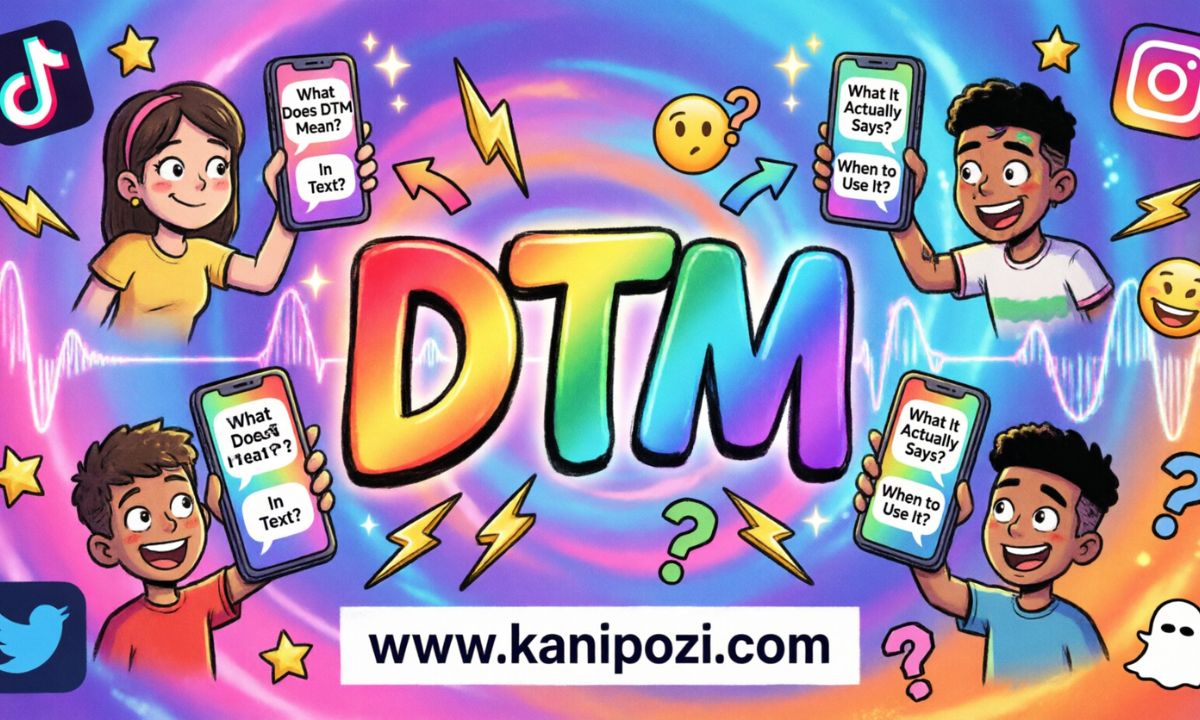
You got a text. It said “DTM.” You smiled, nodded, typed a reply — and then stopped. What does it actually mean? Is this person annoyed? Excited? Done with you forever? Three letters, zero context, maximum confusion. That is the charm and the curse of internet slang. It moves fast, means multiple things, and never comes with a user manual. Good news: this article is that manual.
What Does DTM Mean in Text, Exactly?
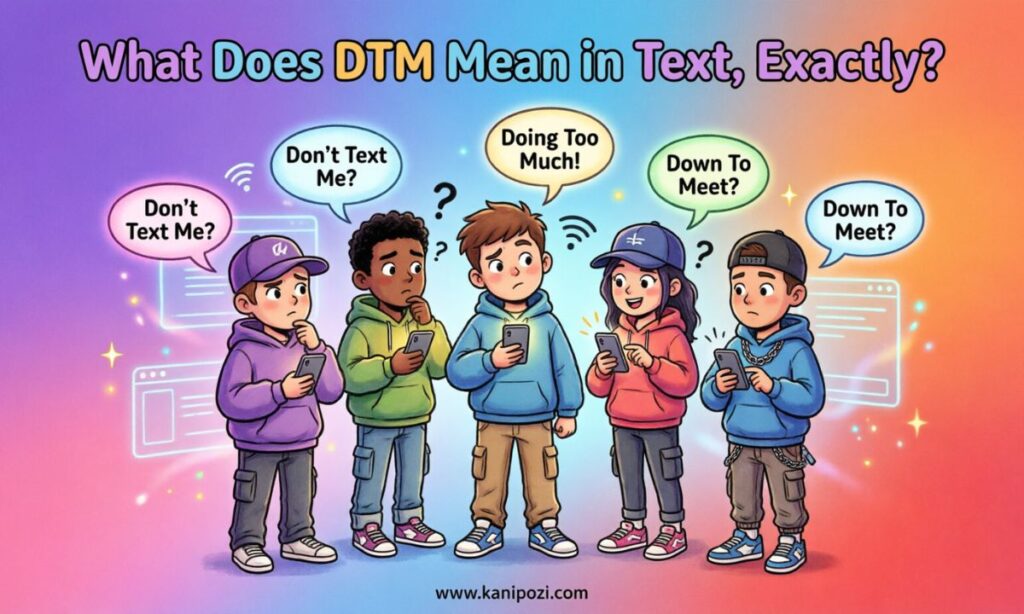
DTM meaning in text most commonly stands for “Doing Too Much” — used when someone is being overly dramatic, extra, or working way harder than a situation calls for. It can also mean “Dead To Me,” “Don’t Text Me,” or “Down To Meet,” depending entirely on context and tone.
At its core, DTM is shorthand that packs a full sentence of feeling into three letters. The most popular meaning — the one you will see most often in group chats, comment sections, and TikTok captions — is “Doing Too Much.” It describes a very specific type of behavior: someone overreacting, overdramatizing, or putting way more energy into something than the moment deserves. Think of a friend who writes a 400-word apology text for arriving three minutes late. That friend is DTM.
But here is where it gets interesting. The same three letters can flip meaning completely based on who is sending them and why. A single “DTM” can be warm and teasing between close friends, or ice-cold and dismissive between people mid-argument. Context is everything.
All the DTM Meanings You Need to Know
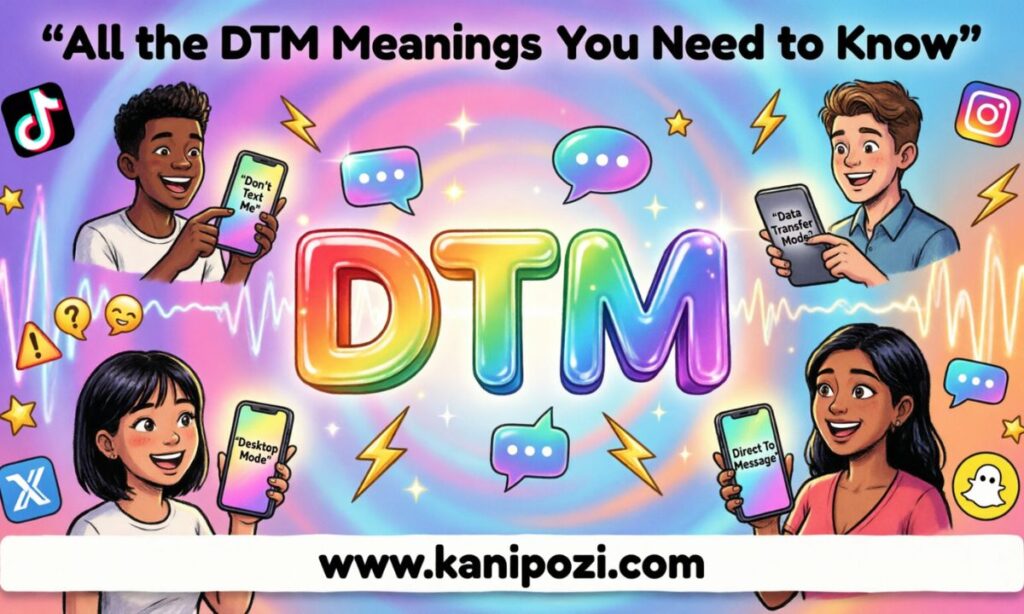
There is no single definition carved in stone. DTM slang has four main interpretations actively used in everyday texting and social media:
- Doing Too Much — Someone is being overly dramatic or extra. Tone: playful, teasing.
- Dead To Me — Cutting someone off emotionally after a betrayal or fallout. Tone: cold, serious.
- Don’t Text Me — Asking for space or expressing frustration. Tone: annoyed, firm.
- Down To Meet — Agreeing to hang out or meet up casually. Tone: friendly, low-pressure.
Four meanings, one abbreviation. This is why reading the vibe of the conversation matters just as much as knowing the dictionary definition.
Breaking Down “Doing Too Much” — The Main Meaning
This is the heavyweight champion of DTM meanings. “Doing Too Much” entered common slang as a way to call out behavior that is unnecessarily over the top. Not mean, just extra. Not always a compliment, but not always an insult either.
The phrase has roots in Black American vernacular English, where it described someone exhausting themselves or others with unnecessary drama or effort. As internet culture absorbed it, the phrase shortened to DTM and started appearing everywhere from Twitter replies to Instagram comments, picking up mainstream traction between 2015 and 2017.
The tone of “Doing Too Much” DTM is usually lighthearted. It is what you say to a friend who rehearsed their coffee order five times before walking into the café. It is what you type when your group chat member posts nine selfies in a row from the same angle.
One important note: “Doing Too Much” DTM is almost always playful between friends. It only turns critical when the relationship is already tense or the tone is cold. Context decides the temperature every time.
Real Texting Examples of DTM in Action
Reading about slang is one thing. Seeing it in actual conversation is where it clicks.
Example 1 — Doing Too Much: Friend: “I drafted a seven-paragraph response to my professor’s one-line email. Should I send it?” You: “Bro you are literally DTM. Send two sentences.”
Example 2 — Dead To Me: Friend: “Did you see what Jake posted about you?” You: “Yeah. Jake is DTM. Moving on.”
Example 3 — Down To Meet: Friend: “Hey, you DTM this weekend for that rooftop thing?” You: “Absolutely, just tell me the time.”
Example 4 — Don’t Text Me: Them: “I’ll explain everything I promise just hear me out.” You: “DTM until you figure yourself out.”
Notice how the same three letters carry completely different weight in each conversation. The words and energy surrounding DTM do most of the heavy lifting.
Where Did DTM Come From?
Language has always been efficient. People have been abbreviating text since the days of telegrams, where every word cost money. The early 2000s rise of SMS brought a new wave of shorthand — LOL, BRB, OMG — born from the same simple need: say more, type less. DTM followed that same path.
Interestingly, this mirrors how slang has always worked throughout history. Even the Bible contains vivid expressions of people doing “too much” — consider the parable of the talents, where one servant buries his gift out of excessive caution, paralyzed by overthinking. Human beings have always needed a word for someone going overboard. DTM is just the modern, three-letter version of that impulse.
By 2020, DTM had spread beyond a single meaning. Communities picked it up and adapted it. “Dead To Me” grew popular through drama-heavy social media conversations. “Down To Meet” became common in dating app culture. The abbreviation kept the same letters but quietly built an entirely different second life alongside its original meaning.
SZN is common in chats — see SZN Meaning in Text for more details.
DTM on Social Media vs. DTM in Private Texts
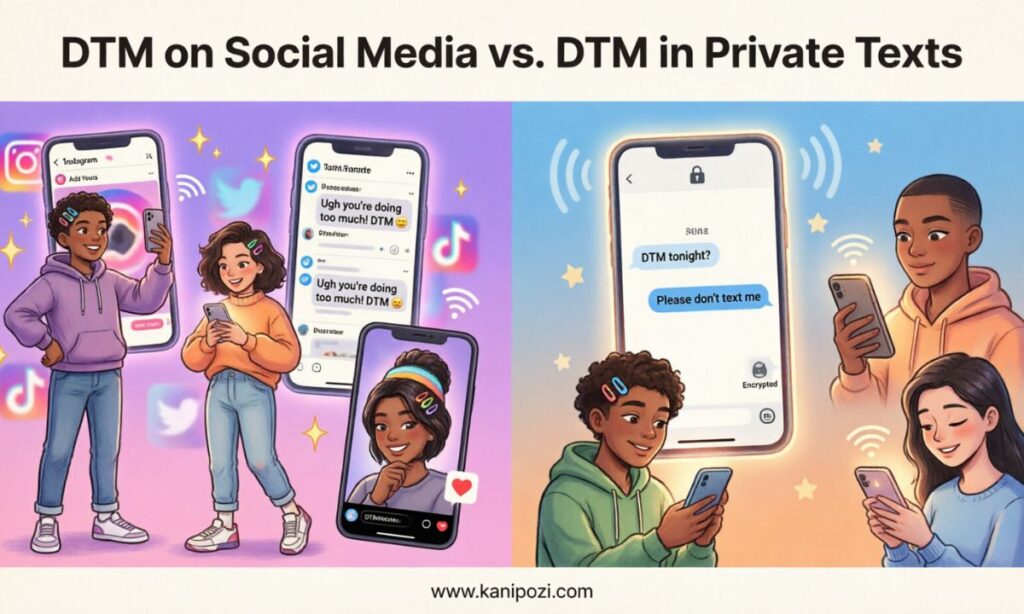
Where you encounter DTM shapes what it means. The platform matters more than people realize.
On TikTok and Instagram, DTM almost always means “Doing Too Much.” It shows up in comment sections as a reaction to wild or theatrical content. Someone posts an elaborate life update about a minor inconvenience? Comments flood in with DTM.
In private texts and DMs, the meaning shifts based on the relationship. Close friends use it playfully. People mid-conflict use it to signal “Dead To Me” or “Don’t Text Me.”
On dating apps, “Down To Meet” is the most common reading. It signals low-key interest in meeting without the pressure of a formal date invitation.
On Twitter or X threads, all four meanings can appear. Context from the surrounding thread usually makes it obvious which one is in play.
The lesson: DTM is platform-sensitive slang. If you see it in a casual group chat, assume playful. If it arrives alone in a cold one-word message after an argument, it is probably not “Down To Meet.”
How to Tell Which DTM Meaning Someone Means
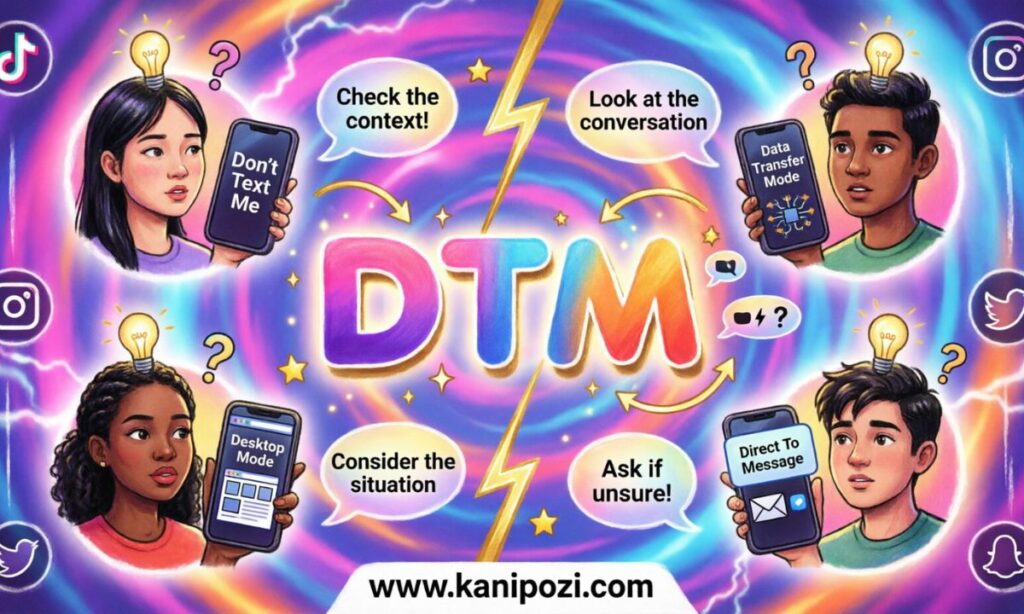
Since DTM pulls in four directions at once, here is a quick mental checklist for decoding it correctly:
- Check the emotional temperature of the conversation. Warm and joking? Probably “Doing Too Much.” Cold and distant? Think “Dead To Me” or “Don’t Text Me.”
- Look at what came just before it. Was someone acting over the top? “Doing Too Much.” Was there a betrayal? “Dead To Me.” Was someone asking to hang out? “Down To Meet.”
- Watch for emojis. A 😂 or 😭 next to DTM almost always signals “Doing Too Much.” No emoji, all lowercase, sent alone — that is a warning sign for one of the colder meanings.
- Consider the relationship. How well do you know this person? Close friends use DTM casually. Newer relationships send it with more edge.
When still unsure, just ask. “Are you saying I am being too extra, or are you actually upset?” One clarifying question saves a lot of unnecessary overthinking — and it is the opposite of DTM.
Common Mistakes People Make with DTM
A lot of confusion around DTM texting slang comes from a few repeatable errors:
Using it with people who do not know it. Sending “DTM” to someone unfamiliar with internet slang can read as confusing or dismissive. What feels like a playful joke to you might feel like a cold brush-off to them.
Using it without context clues. Just dropping “DTM” with nothing around it is one of the fastest ways to accidentally make someone feel dismissed. A single emoji can completely change how the message lands.
Assuming one meaning fits everywhere. Many people assume DTM always means “Doing Too Much” because it is the most common definition. But sending it in a flirty conversation where the other person reads it as “Down To Meet” creates a very different situation.
Using it in professional or formal settings. DTM has absolutely no place in a work email, a LinkedIn message, or a conversation with someone you barely know. Full phrases — “I think you might be overcomplicating this” or “I am available to meet” — communicate the same ideas without the risk.
Which DTM Meaning Should You Use?
This depends entirely on what you actually want to say:
- Want to tease a friend lovingly about being dramatic? Use DTM (Doing Too Much) with a playful emoji.
- Want to signal you are done with someone after a serious falling out? DTM (Dead To Me) works, but consider whether a full sentence is kinder and clearer.
- Need space and want to be direct about it? DTM (Don’t Text Me) is blunt. Only use it if blunt is what the situation genuinely calls for.
- Want to casually say yes to meeting up? DTM (Down To Meet) is easy and low-pressure, perfect for informal invitations.
The golden rule: when in doubt, spell it out. Slang saves time, but clarity saves relationships. A misread two-word abbreviation costs far more than the two seconds you saved by not writing the full phrase.
Related Slang Worth Knowing Alongside DTM
Once you understand DTM, a few related terms start making more sense too:
- Extra — the full-word version of DTM (Doing Too Much). If someone calls you extra, they mean exactly the same thing, just without the abbreviation.
- NDE — “No Drama Energy,” a companion phrase indicating someone wants to keep things calm and conflict-free.
- ETM — “Even Too Much,” a more emphatic version of DTM implying the behavior exceeded even the normal level of extra.
- “Down To…” constructions — DTF, DTH, and similar abbreviations follow the same structural pattern as the “Down To Meet” version of DTM.
Understanding the family of slang around DTM helps you read digital conversations more naturally, without having to pause and search every third message.
When DTM Has Nothing to Do with Texting
Worth mentioning: outside of casual conversation, DTM carries entirely different meanings in professional fields. In geography and engineering, DTM stands for Digital Terrain Model, used in mapping and land analysis. In computing, it refers to Data Transfer Module. In demographic studies, DTM means the Demographic Transition Model, which tracks how birth and death rates shift as societies develop economically.
So if your geography professor or your IT colleague mentions DTM, they are almost certainly not calling you dramatic. Context saves the day, once again.
Frequently Asked Questions
Is DTM always negative?
Not at all. When it means “Doing Too Much,” DTM is usually affectionate teasing between friends. It only feels negative when the relationship is already tense. The “Dead To Me” and “Don’t Text Me” versions are sharper, but even those express frustration more than personal attack.
Can I use DTM in professional settings?
It is best to avoid it. Work emails and client messages call for full phrases. If you mean “I am overcomplicating this,” write that. Clarity always wins over cleverness in professional communication.
What is the most common DTM meaning right now?
“Doing Too Much” remains the most widely recognized meaning across social media and casual texting in 2026. It dominates TikTok, Instagram comments, and group chats. “Down To Meet” is rising in popularity, particularly on dating apps and among Gen Z social planning conversations.
The Bottom Line
Three letters. Four possible meanings. One very important lesson: never assume you know which one someone means without reading the room first.
DTM is a small but surprisingly layered piece of modern language. It can be a laugh between friends, a line drawn in an argument, a warm yes to hanging out, or a firm request for space. The letters do not change — the context does all the work.
Now that you know every meaning, you will never stare at a “DTM” message and wonder again. And if someone ever tells you that you are being DTM for reading a full article about three letters — well, they might have a point. But at least you are prepared.