Quick Answer: In slang, muse means a person, vibe, song, or moment that sparks strong creative or emotional energy. On social media in 2026, calling someone your muse is a soft, aesthetic way of saying they inspire you deeply — romantically, creatively, or emotionally. It is used by Gen Z across TikTok, Discord, Instagram, and text messages.
You’ve seen it everywhere. An Instagram caption that says “she’s literally my muse.” A TikTok comment reading “this song is my muse rn.” A late-night text from a friend: “Why did he become my muse overnight??”
The word muse is having a major cultural moment in 2026 — and it’s not by accident. While the word itself goes back thousands of years, its modern slang meaning has quietly evolved into one of the most emotionally loaded words in Gen Z’s digital vocabulary. It sits at a sweet spot between romantic admiration, aesthetic obsession, and creative inspiration — and that combination is exactly why it resonates so deeply online.
This article breaks down everything you need to know: the core slang meaning, how it evolved, where and how Gen Z uses it today, real chat examples, psychological reasons behind its popularity, and when you absolutely should not use it.
ULTRA FEATURED SNIPPET BLOCK
| Feature | Detail |
| Slang Term | Muse |
| Core Meaning | A person, vibe, or thing that deeply inspires creative or emotional energy |
| Tone | Positive, romantic, aesthetic |
| Most Common Users | Gen Z, creative communities, social media users |
| Primary Platforms | TikTok, Instagram, Discord, text messages |
| Related Terms | Crush, hyperfixation, main character energy, simp, obsession |
| Still Trending in 2026? | Yes — stabilized into everyday emotional vocabulary |
Core Meaning Explained
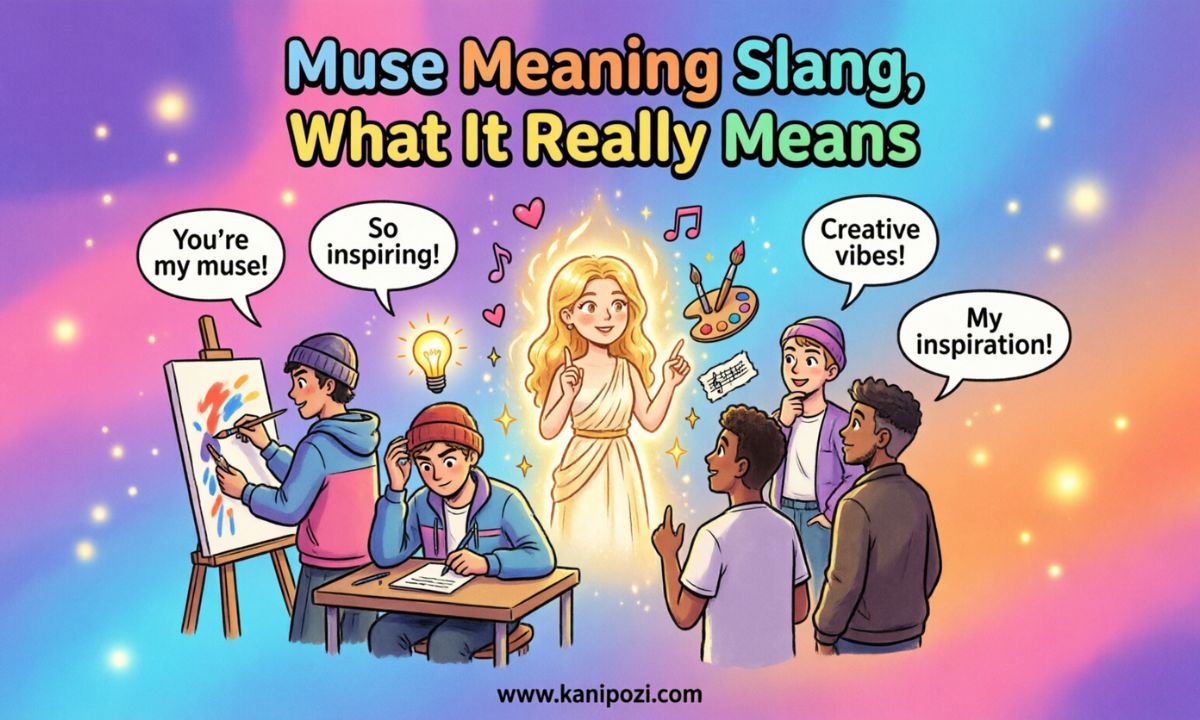
In everyday modern slang, a muse is someone or something that fuels your emotions, creative energy, or aesthetic. It can be:
- A person you have a crush on who you can’t stop thinking about
- A song that perfectly captures your current mood or era
- A fictional character who shapes your personality for a season
- A vibe, aesthetic, or moment that unlocks your creativity
- A situationship partner who inspires your journaling, art, or playlists
The key difference from the dictionary definition? In slang, your muse does not have to know they are your muse. It’s deeply personal — and often a little dramatic, in the best way.
Unlike words like crush (which implies direct romantic interest) or inspiration (which is more clinical), calling something or someone your muse carries cinematic weight. It tells the world: this thing has reached me on an artistic level.
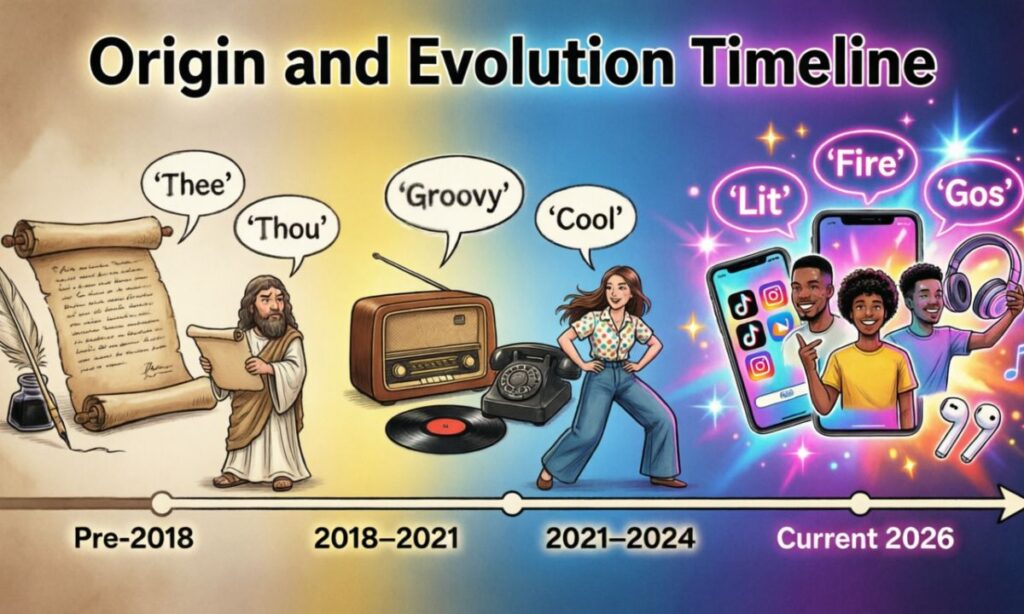
Origin and Evolution Timeline
Early Internet Roots (Pre-2018)
Before social media slang culture picked it up, muse lived primarily in artistic and literary spaces online. Tumblr poetry blogs, DeviantArt communities, and fanfiction circles used it in its traditional sense — a romantic or creative inspiration. It felt elevated, slightly dramatic, very aesthetic. It fit perfectly into the dark academia and soft grunge vibes that defined early 2010s internet culture.
Meme Spread Phase (2018–2021)
Around late 2018, TikTok creators began using muse in a more playful, ironic way. Fan edit videos of fictional characters would be captioned “current muse.” The word started bleeding into casual commentary — not just serious art. People described their hyperfixations, celebrity crushes, and emotional eras using it. This phase democratized the word. You no longer needed to be an artist to have a muse. You just needed feelings.
Mainstream Adoption (2021–2024)
By 2022 and 2023, muse had crossed fully into mainstream Gen Z vocabulary. It appeared regularly in Instagram Reels captions, aesthetic Pinterest boards, and Discord servers. The word blended effortlessly with other trending emotional language: situationship, hyperfixation, main character energy. It no longer felt pretentious — it felt relatable and expressive.
2026 Current Usage
Today, muse is no longer at peak virality — it has done something better. It has stabilized. It is part of the standard emotional vocabulary for Gen Z and younger millennials online. People use it authentically, not just for trend purposes. In 2026, having a muse is a normal thing to discuss openly on social media, in texts, and in creative communities.
How Gen Z Uses Muse Meaning Slang Today
TikTok
On TikTok, muse most often appears in video captions and comment sections. Aesthetic edit videos, POV content, and mood-based slideshows regularly use the phrase “current muse” to describe whoever or whatever is dominating someone’s emotional attention. It is also used in comment sections to compliment creators: “you are literally everyone’s muse without trying.”
Discord
In Discord servers — especially creative, writing, art, and fandom spaces — muse is used in a more reflective, conversational way. People might say “I found a new muse for my writing project” or “my muse energy is fully him rn, I’m cooked.” It signals emotional investment and creative activation.
Gaming Chat
In gaming communities, muse shows up more ironically. A player might call a favorite game character their muse for a specific season, or describe a soundtrack as their current muse. The tone is lighter here — more about humor and shared obsession than deep emotional expression.
Instagram Comments
Instagram is where muse gets its most aesthetic, complimentary usage. Comments like “she’s a muse omg” or “this photo is giving muse energy” are common under fashion, art, and lifestyle content. It functions as high praise — implying that someone’s look, energy, or vibe is genuinely inspiring, not just pretty.
Text Messages
In private texts, muse tends to be more emotionally raw. People use it when describing a new crush, a situationship, or someone they cannot stop thinking about. It is softer than saying “I’m obsessed” and more meaningful than “I like them.” It occupies a unique emotional middle ground.
Real Chat Style Examples
Here are authentic-feeling examples across contexts:
TikTok Caption: “new era, new muse, same playlist 🎧”
Instagram Comment: “bro she’s literally a walking muse idk what to tell you”
Discord DM: “I don’t know why but he’s been my muse for like three weeks straight and my art is thriving”
Text Message: “stop I think he’s becoming my muse again why does this keep happening”
Reddit Post Flair: “my current muse is a fictional character and I’m not embarrassed about it”
Gaming Chat: “this OST is my muse rn, I cannot stop listening to it mid-match”
Muse in Poetry vs. Modern Muse Meaning in Love
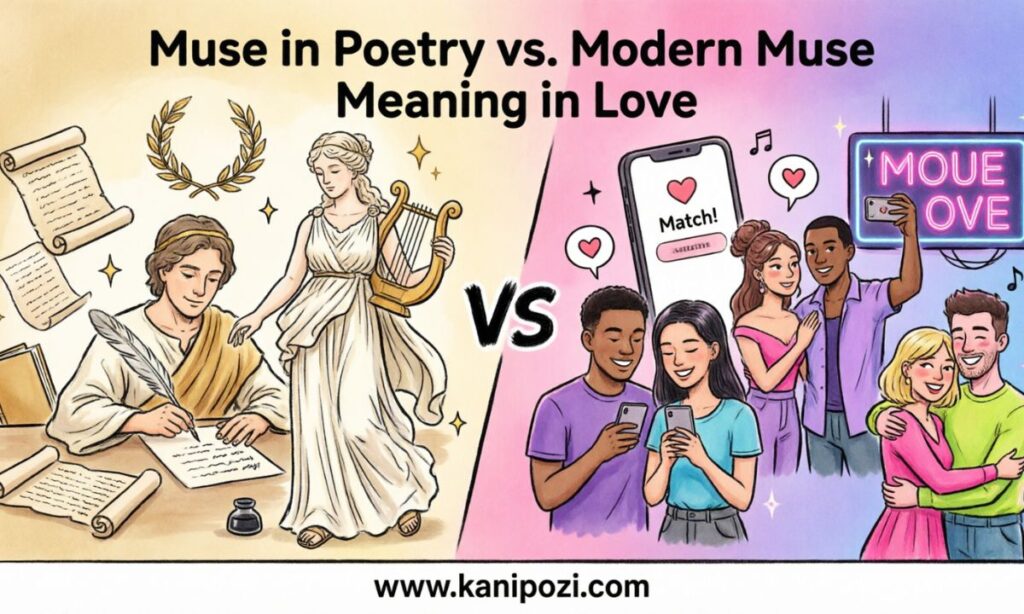
In classical poetry, a muse was an exalted, often unattainable figure — someone like Beatrice to Dante, or the idealized beloved in a Shakespearean sonnet. The muse was almost godlike in their influence, transforming the artist’s suffering into beauty.
In modern love and relationship contexts, my muse carries a similar emotional weight but is far more accessible. When someone calls their partner or crush their muse, they mean: you bring out a version of me that feels alive and creative. You are the reason I want to make things, write things, feel things.
It is one of the more romantic things someone can say in 2026 — precisely because it implies depth without being explicit. I love you is direct. You are my muse is cinematic.
Similar Slang Comparison
| Slang Term | Meaning | Emotional Intensity | Usage Context |
| Muse | Someone who deeply inspires creative or emotional energy | Medium-High | Creative, romantic, aesthetic |
| Crush | Someone you have romantic feelings for | Medium | Universal, casual |
| Simp | Someone who is overly devoted or flattering | High (often self-deprecating) | Humor, online communities |
| Obsession | Intense, consuming fixation on someone or something | Very High | Casual, dramatic |
| Main Character Energy | Feeling like the protagonist of your own story | Medium | Self-focused, empowering |
| Hyperfixation | Intense focus on a person, topic, or interest | High | Neurodivergent communities, Gen Z |
The word muse sits in a unique position — it romanticizes without being desperate (unlike simp), and it implies creativity without being clinical (unlike inspiration). That balance is why it lasts.
Psychological and Social Meaning
It Romanticizes Everyday Life
One of the deepest appeals of muse slang is that it turns ordinary emotional experiences into something that feels artistic and meaningful. Instead of saying “I can’t stop thinking about this person,” you say “they’re my muse.” Suddenly, your feelings have a narrative. They feel earned, expressive, and worthy of attention. Gen Z craves this kind of cinematic framing for real life — and muse delivers it.
Social Validation Behavior
Publicly calling someone a muse on social media is a form of identity signaling. It communicates: I am a creative, emotionally aware person who experiences the world aesthetically. In digital culture where personal branding matters deeply, this kind of vocabulary becomes a tool for expressing not just how you feel — but who you are.
Identity Expression
Gen Z builds identity through what they call their “eras” — distinct phases defined by a mood, aesthetic, or emotional focus. A muse is often the anchor of a new era. Announcing a new muse is, in a sense, announcing a new version of yourself. It marks emotional chapters and gives people a way to narrate their personal growth and change publicly.
Safe Vulnerability
Saying “they are my muse” is emotionally safer than saying “I have feelings for them” or “I am obsessed.” The artistic framing softens the intensity. It allows for vulnerability without overexposure — a quality that resonates deeply in an era where oversharing is both normalized and quietly judged.
When Not To Use This Slang
Professional Situations
Avoid using muse in its slang form at work, in job interviews, or in professional communications. In a corporate environment, calling a colleague or client your muse can sound confusing, inappropriate, or simply out of place. Stick to the classical meaning if you use it at all — and even then, use it sparingly.
Older Audiences
Many people over 35 still interpret muse in its traditional artistic or classical sense. If you use the slang version with someone who is not familiar with Gen Z digital culture, you may come across as dramatic or confusing. Context is everything — read the room.
Formal Writing
Academic essays, business reports, official applications, and formal journalism are not the place for slang usage of muse. The word carries a specific, well-established formal meaning in literary and artistic contexts. Using it casually in formal writing will undermine your credibility.
Is This Slang Still Trending in 2026?
Yes — but it has matured. Muse is no longer the flashy new word that gets used purely for trend value. Instead, it has settled into something more stable and genuine: a piece of emotional vocabulary that feels authentic rather than performative.
Think of it like aesthetic or vibe — words that were once peak trend terms and are now simply part of how younger generations naturally express themselves. Muse has reached that stage. It is still used daily across platforms, but the people using it are doing so because it genuinely captures what they want to say — not because it is viral.
Pro Tips to Use It Naturally
- Match the platform’s tone. On TikTok, keep it short and caption-friendly. On Discord, let it be a little more conversational and personal.
- Don’t overuse it. Having a muse should feel meaningful. If everything is your muse, nothing is.
- Lean into the aesthetic. Muse works best when the surrounding context is slightly poetic — a thoughtful caption, an emotional comment, a heartfelt text.
- Use it for people AND things. Songs, places, films, eras — not just people. This keeps the word feeling broad and expressive.
- Pair it with other emotional vocabulary. Phrases like “new era,” “current obsession,” and “living in my feels” complement the muse energy naturally.
Common Mistakes
- Using it too literally. Not everyone who calls someone a muse is trying to collaborate artistically with them. In slang, it’s about emotional and aesthetic inspiration, not a formal creative role.
- Misreading the romantic signal. Being called someone’s muse can imply romantic interest — but not always. Context matters. A fan calling a creator their muse is different from a situationship partner doing the same.
- Forcing it in casual settings. If the vibe is purely humorous or low-key, muse can feel overdramatic. Use it where the emotional or aesthetic tone already exists.
- Applying it to negative feelings. Muse energy is almost always positive. Using it to describe someone who causes pain or anxiety doesn’t quite land — that’s better expressed with words like obsession or situationship.
Related Slang Words Mini Glossary
| Term | Meaning |
| Hyperfixation | An intense, all-consuming focus on a person, topic, or interest — common in neurodivergent communities but widely adopted by Gen Z |
| Situationship | A romantic connection that exists without a clear label or commitment |
| Era | A defined emotional or aesthetic phase of someone’s life, often marked by a specific mood, person, or style |
| It’s giving | Used to describe the vibe or energy something conveys (“it’s giving muse energy”) |
| Main character | Feeling like the protagonist of your own story; prioritizing your own narrative |
| Delulu | Short for delusional — romanticizing or over-imagining a connection that may not fully exist |
| NPC energy | Acting passively or without individual will; the opposite of main character energy |
| Soft launch | Subtly introducing someone to your social media without making a formal announcement |
Frequently Asked Questions
What does muse mean in slang?
In slang, a muse is a person, vibe, song, or moment that deeply inspires your emotions or creativity. It is used on social media and in texts to describe someone who fuels your aesthetic, romantic feelings, or artistic energy.
What does “my muse” mean in love?
Calling someone your muse in a romantic context means they inspire a deeply emotional, creative version of you — it’s a soft, cinematic way of expressing deep admiration or romantic feelings without being overly direct.
What does muse mean for a person?
When used to describe a person, muse means someone whose energy, presence, or personality sparks strong creative or emotional inspiration in you — whether that is romantic, platonic, or purely aesthetic.
What does muse mean in poetry vs slang?
In poetry, a muse is a classical source of artistic inspiration — often idealized and elevated. In slang, the meaning is the same at its core, but far more casual, personal, and applicable to everyday emotional life, not just formal art.
Is muse slang or formal?
Muse has both a formal definition (a source of creative inspiration, rooted in Greek mythology) and a modern slang usage. In slang, it carries a casual, emotionally expressive tone common on social media platforms and in everyday digital communication.
What does muse slang mean on Reddit?
On Reddit, users in creative, fandom, and relationship communities use muse to describe their current emotional or creative obsession — often with a self-aware, slightly dramatic tone. It frequently appears in posts about art, writing, and situationships.
Conclusion
Muse is one of those rare slang words that earns its staying power. It connects ancient mythology to modern emotional expression, gives people a cinematic frame for their feelings, and signals creative intelligence without effort. In 2026, it is no longer a trend — it is a staple.
Whether you are using it to describe a new crush, a song that owns your playlist, or a character who has taken over your brain this season, the word carries genuine emotional depth. It romanticizes ordinary life. It makes feelings feel like art.
And maybe that is exactly what internet culture needed.
If this helped you decode the vibe — you already know what to do with it.😊

Sam Witty is an experienced content writer with 7 years of expertise in language, word meanings, and linguistic research. His mission at Kanipozi is to provide accurate, easy-to-read definitions that make learning new words simple, fast, and enjoyable