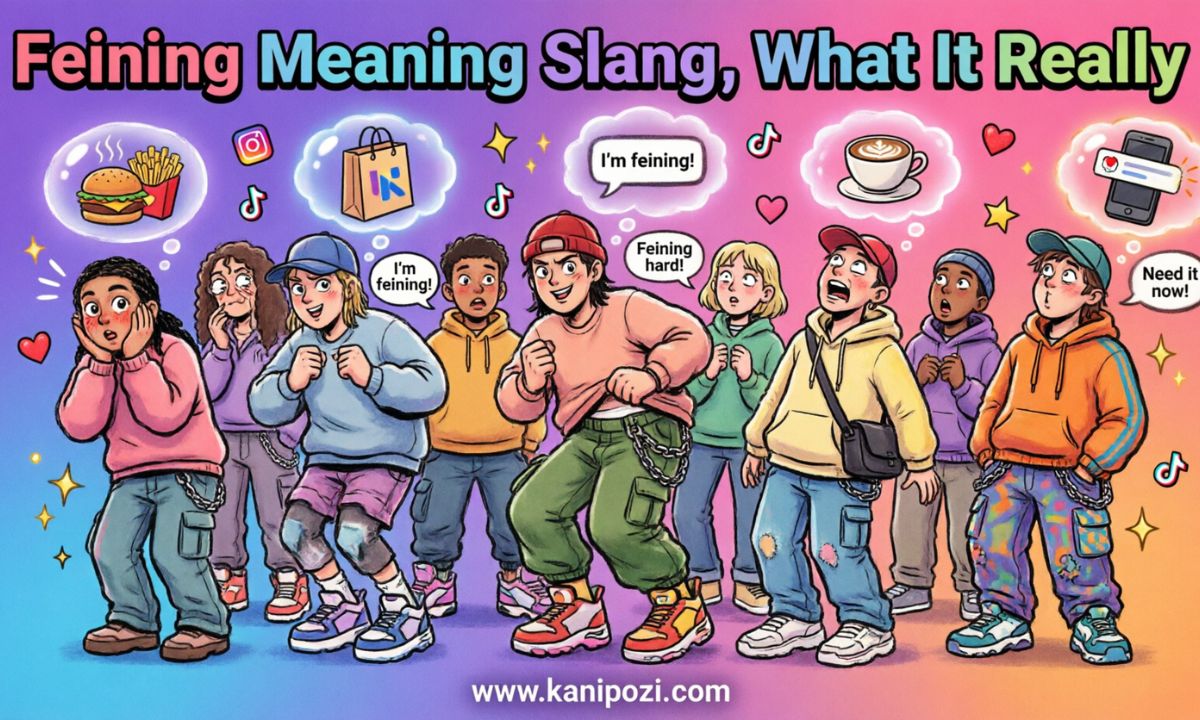
If you’ve scrolled through TikTok recently, opened a Discord server, or caught a late-night group chat, there’s a solid chance you’ve seen it: feining. Someone’s feining for a reply. A gamer is feining for a new drop. A TikToker captions a Starbucks run, “me feining at 11pm like it’s a medical emergency.” The word is everywhere — but what does it actually mean, and why has it blown up so hard in 2026?
This guide breaks down the feining meaning slang completely — the definition, where it came from, how Gen Z uses it across every platform, and what it says about digital culture today. Whether you’re trying to keep up or just confused by a friend’s text, you’re in the right place.
⚡ Featured Snippet: What Does Feining Mean in Slang?
Feining (also spelled feening or feenin) is internet and street slang meaning to intensely crave, desperately want, or obsess over something. It signals an overwhelming, almost uncontrollable desire — whether for a person, a product, a response, or an experience. In 2026, it’s used mostly in a playful, exaggerated tone by Gen Z on TikTok, Discord, Instagram, and in everyday texting.
| Feature | Detail |
|---|---|
| Core Meaning | Intensely craving or desperately wanting something |
| Secondary Meaning | Faking or pretending (confusion with “feigning”) |
| Origin Word | “Fiending” → from “fiend” (Old English: féond) |
| Tone | Mostly playful, dramatic, exaggerated |
| Primary Users | Gen Z, Gen Alpha, gamers, TikTok creators |
| Top Platforms | TikTok, Discord, Instagram, text messages |
| Similar Slang | Thirsty, down bad, simping, glazing |
Origin + Evolution Timeline: Where Did Feining Come From?
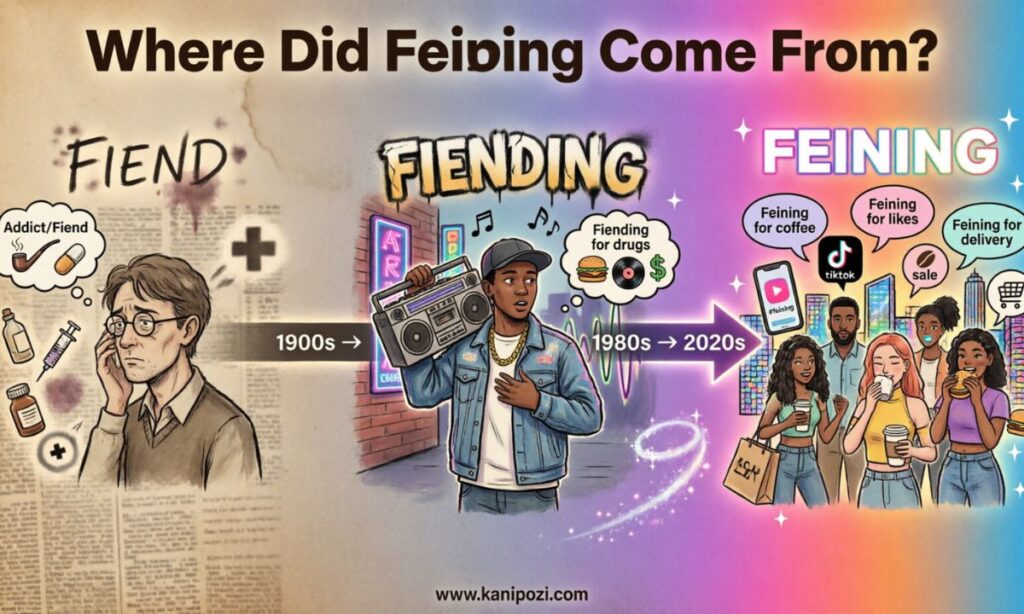
Understanding the feining meaning slang requires going back to its roots — because this word has traveled a long way before landing in your comment section.
Early Internet Roots
The word traces directly to “fiend,” an Old English term (féond) that originally meant enemy or devil. By the 19th century, it shifted to describe someone with obsessive behaviors — think “opium fiend.” In the 20th century, hip-hop and street culture adopted “fiending” to describe intense craving, especially around substances. Artists from the 90s and early 2000s wove “fiending” into lyrics as a raw expression of uncontrollable desire, anchoring it firmly in urban slang vocabulary.
Meme Spread Phase
By the late 2010s, social media started transforming the word. TikTok creators began using “feening” in self-deprecating, comedic contexts — “me feening for validation after posting one selfie.” The spelling fragmented because, on TikTok especially, words are written phonetically, fast, and without a spell-check mindset. “Feening” became “feenin,” then “feining.” The meaning didn’t change, but the aesthetic shifted from raw to ironic.
Travis Scott’s track FE!N accelerated this shift dramatically. The song became a cultural touchstone at social gatherings, and the word “fein” got attached to exaggerated longing in meme culture — no longer just for substances, but for anything someone wanted badly enough to be funny about it.
Mainstream Adoption (2024–2025)
Between 2024 and 2025, “feining” crossed from niche online slang into mainstream digital conversation. Instagram comment sections, Discord servers, and group chats all adopted it. The word stopped needing explanation — if you were online, you understood it. Search trends for “feining meaning” spiked as people outside of Gen Z started encountering the term and looking it up.
2026 Current Usage
Today, feining is fully embedded in digital communication culture. It’s used across age groups, though Gen Z and younger Gen Alpha users remain its primary speakers. The tone is almost always exaggerated and humorous. Serious usage — linked to actual addiction or intense dependency — still exists in recovery and clinical contexts, but the slang application is overwhelmingly lighthearted.
How Gen Z Uses Feining Today — Platform by Platform
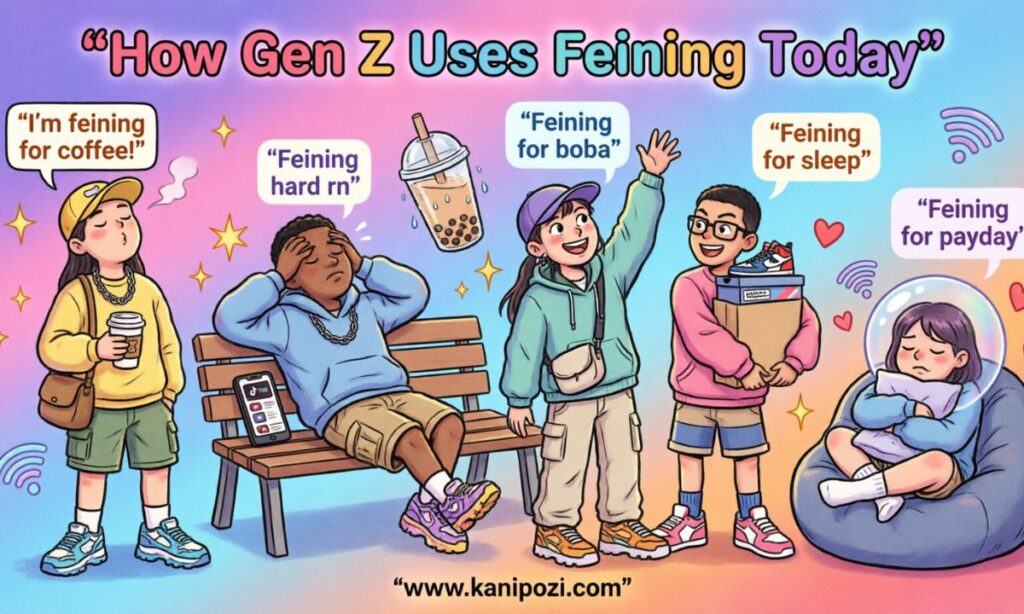
The way “feining” functions changes slightly depending on where it’s used. Context is everything with this word.
TikTok
On TikTok, feining lives in captions and comment sections. It’s attached to relatable, dramatic moments — the kind that get mass engagement because everyone recognizes themselves in the exaggeration.
Common TikTok usage:
- Caption under a food video: “feining for this at 2am no thoughts just cravings”
- Comment on a celebrity post: “bro is feining for their attention lmaooo”
- Trend format: POV videos of someone feining over something ridiculous, played completely straight for comedic effect
Discord
In Discord servers — especially gaming, fandom, and general hangout communities — feining gets used in real-time chat as a marker of enthusiasm or frustration. It’s conversational, casual, and often self-aware.
Discord examples:
- “I’m feining for the new patch notes bro where are they”
- “stop feining in the announcements channel lol it’ll drop when it drops”
Gaming Chat
Gamers use feining to describe that desperate anticipation for a new game drop, skin release, or ranked reset. It maps perfectly onto gaming culture’s already-dramatic relationship with hype.
Gaming context:
- “whole squad feining for the new season to start”
- “he’s feining for that legendary skin like it’s gonna change his K/D”
Instagram Comments
Instagram comment sections are where “feining” gets used most visually — reacting to food posts, travel content, fashion drops, or celebrity updates. It’s short, punchy, and reads well in comment format.
Instagram comment style:
- “feining 😭😭” (under a food post)
- “literally feining for this fit rn”
Text Messages
In texts, feining signals either real enthusiasm or playful teasing. It’s flexible enough to work in both directions — expressing your own craving or calling out someone else’s desperation.
Text examples:
- “I’m feining for a response rn you good?”
- “stop feining bro I said I’d be there at 8”
Real Chat-Style Examples in Context
Seeing “feining” in natural conversation makes the meaning click faster than any definition. Here are real-style exchanges showing how it lands:
Feining Meaning — Craving (Most Common)
Alex: why are you still up
Sam: feining for this new episode to drop I can’t sleep
Alex: bro it’s 3am go to bed
Sam: not until I watch it
Feining Meaning — Faking / Pretending
Jamie: she said she’s fine but idk
Riley: she’s feining, she’s been venting to everyone else
Jamie: oh so it’s that serious
Feining as a Synonym (Similar Terms in Use)
Group chat: “y’all feining for that drop or is it just me”
Translation: Is everyone as desperately hyped for this release as I am?
Feining vs. Feigning — The Confusion Explained
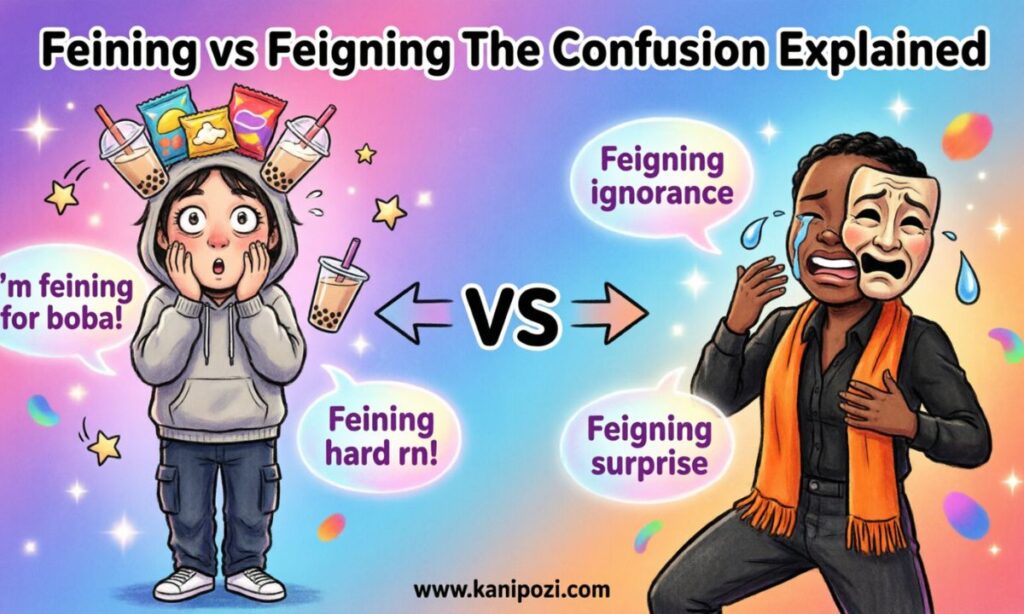
One of the biggest sources of confusion around this word is the near-identical spelling of feining and feigning. They are not the same thing, and mixing them up changes meaning entirely.
| Term | Pronunciation | Meaning | Context |
|---|---|---|---|
| Feining | FEE-ning | Intensely craving or obsessing | Casual slang, online chat, texts |
| Feigning | FAY-ning | Deliberately pretending or faking | Formal English, professional writing |
“She is feigning interest” = She is pretending to be interested (possibly deceptive).
“She is feining for that new collab” = She is desperately craving that new collab (enthusiastic).
These are different words with different histories. Using one when you mean the other shifts the whole vibe of what you’re communicating.
Similar Slang Comparison: How Feining Stacks Up
“Feining” doesn’t exist in isolation — it lives in a whole ecosystem of Gen Z slang that describes desire, desperation, and obsession. Here’s how it compares:
| Slang Term | Core Meaning | How It Differs from Feining |
|---|---|---|
| Thirsty | Desperate for attention or validation | More romantic/social; feining applies to anything |
| Simping | Obsessively admiring someone romantically | Romantically focused; feining is broader |
| Down bad | Emotionally desperate, often romantically | Heavier emotional weight; feining is more playful |
| Glazing | Excessively praising someone | About complimenting; feining is about wanting |
| Clout chasing | Seeking fame through others | Strategic behavior; feining is raw craving |
| Obsessed | Standard English equivalent | Formal; feining is informal and punchier |
Feining fills a specific gap — it’s the most versatile of these terms, applying equally to food, games, people, content, or products without feeling too heavy or too romantic.
Psychological + Social Meaning: What Feining Really Signals Online
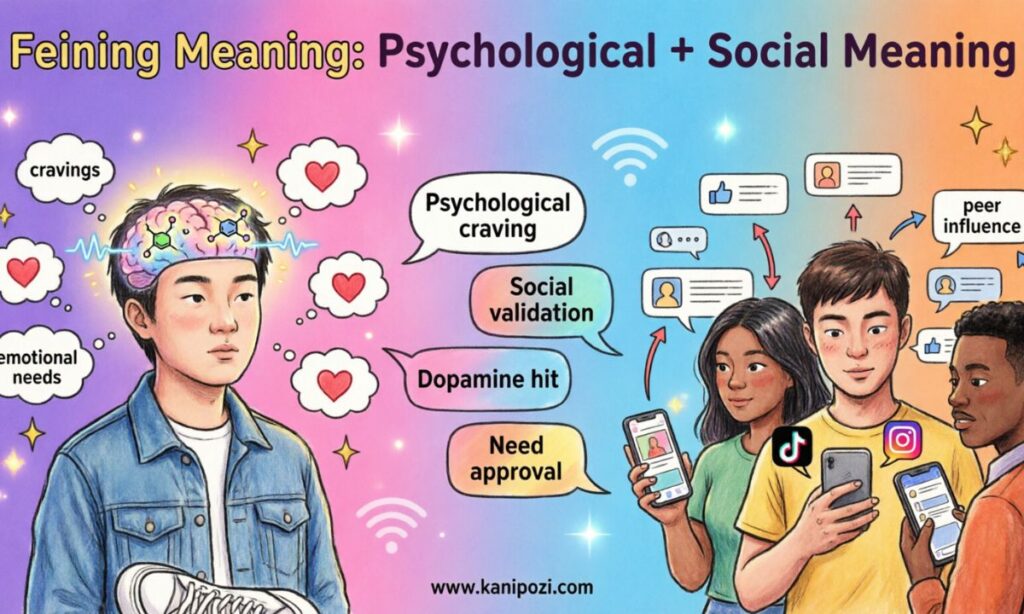
Language doesn’t just describe reality — it shapes it. When someone uses “feining” in a digital space, they’re signaling more than just craving. They’re performing a specific kind of social identity.
Feining signals:
- Belonging — Using current slang shows you’re plugged into the same cultural moment as everyone else
- Self-awareness — The exaggerated tone signals you know you’re being a little dramatic, and you’re in on the joke
- Authenticity — Unlike polished language, slang reads as unfiltered, which Gen Z values highly
- Relatability — Posts that use “feining” invite others to agree, share, or react
There’s also a psychological layer: the playful framing of intense desire makes it socially acceptable to express vulnerability. Saying “I’m feining for that reply” is actually more emotionally honest than “I’m anxious waiting for a response” — but it’s delivered in a way that deflects with humor. That balance is exactly why this kind of slang thrives.
When NOT to Use “Feining”
Even the most natural-sounding slang has wrong contexts. Using “feining” in the wrong place can make you sound out of touch, insensitive, or just confusing.
Avoid feining:
- In professional or formal writing — use “craving,” “eager,” or “anticipating”
- When discussing actual addiction or substance dependency — the clinical weight of the word can trivialize real struggles
- In formal social media posts for brands or institutions — slang ages quickly and can misfire with older audiences
- With people who don’t use Gen Z slang regularly — the confusion with “feigning” creates miscommunication
Is Feining Still Trending in 2026?
Short answer: yes. The word has moved past early-adopter territory into widespread use, which means it’s no longer cutting-edge but it’s also not dead. It sits in that stable middle zone where it’s understood widely enough to communicate clearly, but hasn’t been killed off by overuse yet.
The fact that searches for “feining meaning slang” continue to spike suggests there’s still a large portion of the population encountering it for the first time — which means the word is still doing cultural work. It hasn’t become “cringe” the way overused terms like “YOLO” or “on fleek” did. That’s partly because feining has enough grammatical flexibility to stay fresh: it works as a verb, an adjective descriptor, and a reaction, which extends its shelf life considerably.
Pro Tips to Use “Feining” Naturally
If you want to work this word into your vocabulary without it feeling forced, here’s what actually works:
- Use it for exaggerated cravings — the funnier and more dramatic the object of desire, the better the comedic payoff
- Pair it with a subject — “feining for X” reads better than just “feining” alone in most contexts
- Match the platform tone — Discord and texts get more casual usage; TikTok captions benefit from the full dramatic setup
- Don’t over-explain it — using the word naturally and moving on signals fluency; stopping to define it kills the vibe
- Read the room — if the group chat doesn’t use slang heavily, dropping “feining” cold can confuse more than connect
Common Mistakes People Make
Mistake 1: Spelling it “feigning” when you mean feining
These look almost identical but mean entirely different things. Double-check which one you’re reaching for.
Mistake 2: Using it in serious contexts
If someone is genuinely struggling with cravings or dependency, calling it “feining” dismisses the seriousness. Context matters.
Mistake 3: Forcing it into every sentence
Slang works because it shows up at the right moment. Using “feining” repeatedly in the same conversation makes it feel performative.
Mistake 4: Assuming everyone knows the word
Outside Gen Z circles and online spaces, many people still haven’t encountered it. Gauge your audience.
Related Slang Words — Mini Glossary
These terms exist in the same cultural neighborhood as “feining” and often appear alongside it in online conversations:
| Term | Meaning |
|---|---|
| Rizz | Natural charm or charisma, especially romantic |
| Down bad | Emotionally desperate, usually romantically |
| No cap | Honestly, for real — used to emphasize truth |
| Delulu | Delusional; believing something unrealistic, often about a crush |
| Glazing | Complimenting someone excessively to the point of embarrassment |
| Slay | Performing or looking exceptionally well |
| Ate (and left no crumbs) | Did something perfectly with no room for criticism |
| Main character energy | Acting like the protagonist of your own life story |
| NPC behavior | Acting robotically, unthinkingly, without personality |
| Brain rot | Mindless consumption of content; often self-described humorously |
Frequently Asked Questions
What does feining mean in slang?
Feining means intensely craving or desperately wanting something — used in an exaggerated, often humorous way in online and casual communication.
Is feining the same as feigning?
No. Feining means craving or obsessing; feigning means deliberately pretending or faking. They sound similar but have completely different meanings and origins.
Where did feining come from?
It evolved from “fiending,” rooted in the word “fiend” — originally associated with addiction culture and later popularized in hip-hop before becoming mainstream internet slang.
How do you use feining in a sentence?
Example: “I’m feining for that new drop to go live already.” It works as a verb describing intense desire for something.
Is feining still popular in 2026?
Yes. It’s no longer brand-new, but it remains widely used across TikTok, Discord, Instagram, and text messaging — especially among Gen Z and Gen Alpha users.
What’s a synonym for feining?
Common synonyms include craving, thirsting, obsessing, or jonesing — though none carry the same casual digital-native tone as feining.
Can feining mean faking?
In some contexts online, people use “feining” when they mean “feigning” (faking), due to spelling confusion. Technically they’re different words, but the mix-up is common in casual writing.
What’s the difference between feining and simping?
Simping focuses on romantic admiration, usually one-sided. Feining is broader — it applies to anything you intensely want, from food to a game release to a person.
Conclusion
“Feining” is one of those slang terms that tells you something real about the culture that made it. It’s dramatic without being serious, vulnerable without being heavy, and specific without being narrow. That combination is exactly why it’s spread so effectively across TikTok, Discord, gaming spaces, and group chats in 2026.
At its core, feining meaning slang boils down to one thing: I want this so badly it’s almost funny. And in a digital world where expressing genuine emotion can feel like too much, that playful framing is doing a lot of social work. Now that you know exactly what it means, where it came from, and how to use it right — you’re fully fluent. Go forth and fein accordingly.

Sam Witty is an experienced content writer with 7 years of expertise in language, word meanings, and linguistic research. His mission at Kanipozi is to provide accurate, easy-to-read definitions that make learning new words simple, fast, and enjoyable