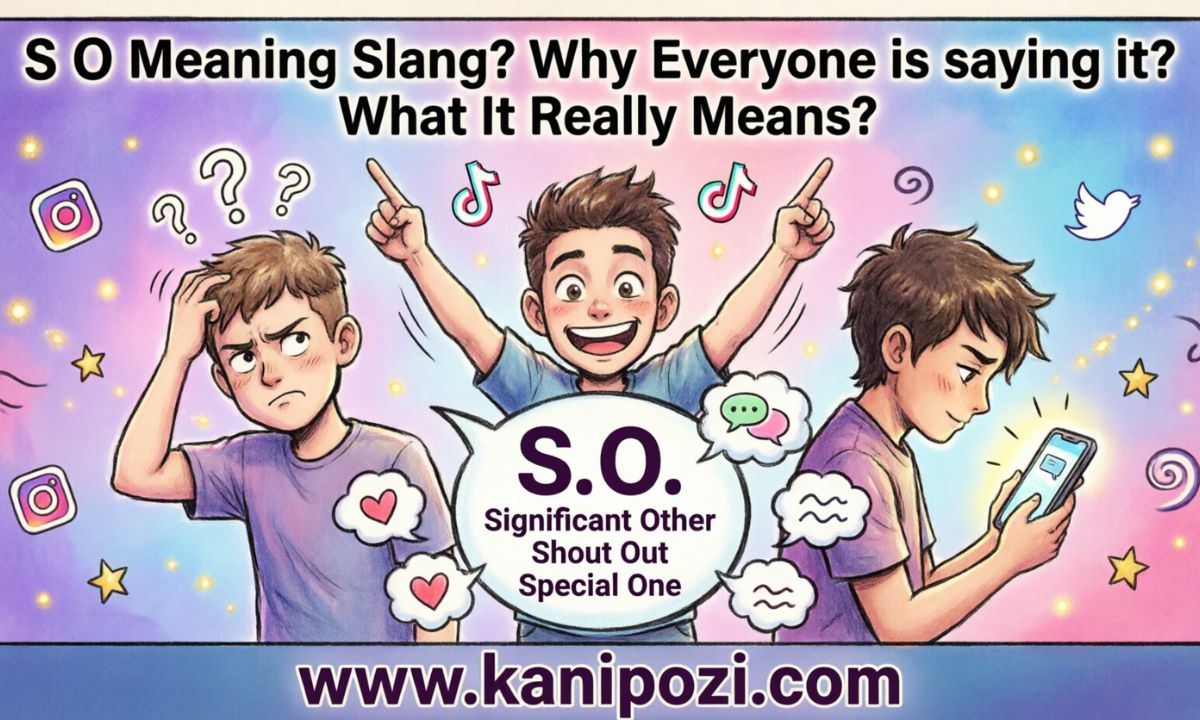
You’ve seen it in comment sections, TikTok replies, Discord servers, and late-night text threads. Someone drops a casual “s o” and the whole vibe of the conversation shifts. Is it sarcasm? Emphasis? Attitude? All three at once? If you’ve paused while scrolling and wondered what exactly is going on — you’re not alone. The S O meaning in slang is one of the most searched micro-expressions in 2026, and for good reason. It punches way above its weight. This guide unpacks every layer of the S O meaning, from its roots to its real-time usage across every platform where Gen Z lives digitally.
ULTRA FEATURED SNIPPET BLOCK
What does S O mean in slang?
S O (also written as “s/o” or “S.O.”) has two primary slang meanings in 2026:
- Significant Other — a gender-neutral term for a romantic partner
- Shoutout — a public acknowledgment or expression of appreciation
As a stylized text expression (“s o” with a space), it signals dramatic emphasis, sarcasm, or exaggerated emotion — the digital equivalent of drawing out the word “sooo” with visible attitude.
Core Meaning Explained
The S O meaning isn’t one thing — it’s context-dependent, platform-specific, and tone-driven. That’s precisely what makes it interesting and, at times, confusing.
When someone texts “My S.O. is coming tonight,” they clearly mean their romantic partner. When a TikToker captions a video “s o iconic,” that’s pure dramatic flair. When a YouTuber says “big s/o to everyone who subscribed,” that’s a shoutout.
Three letters. Three wildly different vibes. Understanding which one is being used comes down to context — and this guide will teach you to read it every time.
Origin and Evolution Timeline
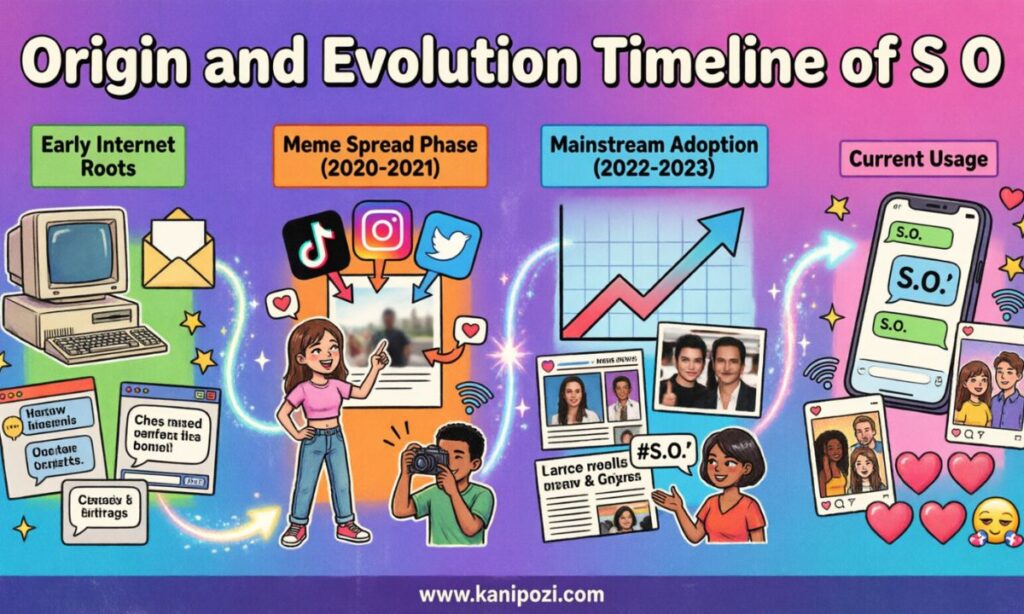
Early Internet Roots
The S O meaning for “Significant Other” dates back to the early days of internet message boards in the late 1990s and early 2000s. Wedding planning forums and family community boards needed a gender-neutral, relationship-status-neutral way to reference a partner without revealing personal details. “S.O.” filled that gap perfectly. It was clinical but warm, vague but understood.
Around the same time, “so” itself was being stretched for emphasis in chat rooms and early SMS. Typing “so tired” gave way to “sooooo tired,” which eventually compressed into “s o” with spacing as a stylistic shorthand that conveyed the same drawn-out feeling without extra letters.
Meme Spread Phase
Between 2010 and 2018, the S O meaning for “shoutout” exploded alongside YouTube culture. Creators started thanking fans and collaborators with a quick “big s/o to…” — and the abbreviation stuck. Reddit picked it up. Twitter amplified it. By the mid-2010s, “s/o” as a shoutout was standard internet vocabulary.
Meanwhile, the spaced “s o” format began appearing in Tumblr posts and early Twitter threads as a way to communicate dry sarcasm or exaggerated emotion. The spacing was intentional — it mimicked the visual pause of stretching a word out in speech.
Mainstream Adoption
By 2020, all three variations of the S O meaning had fully crossed into mainstream digital culture. Gen Z adopted and adapted them. The “Significant Other” usage became standard in inclusive relationship discourse. The shoutout version embedded itself in creator culture. And the stylized “s o” expression became a signature of understated Gen Z irony and low-key drama.
2026 Current Usage
S.O. Meaning in a Relationship
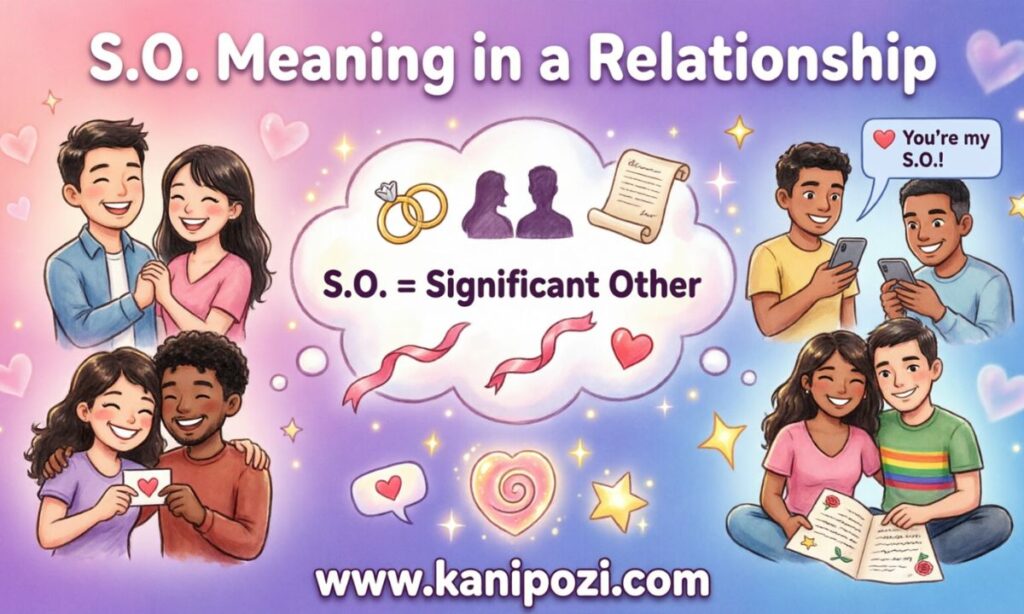
This is the oldest and most formal use of the S O meaning. S.O. stands for Significant Other — a deliberate choice to describe a romantic partner without specifying gender, marital status, or the nature of the relationship.
Why people use it:
- It’s inclusive and doesn’t assume gender identity
- It avoids revealing relationship details (dating vs. engaged vs. married)
- It’s neutral in professional or semi-public conversations
Example: “Can’t make it to the after-party — my S.O. has dinner plans for us.”
S O Meaning in a Medical Report
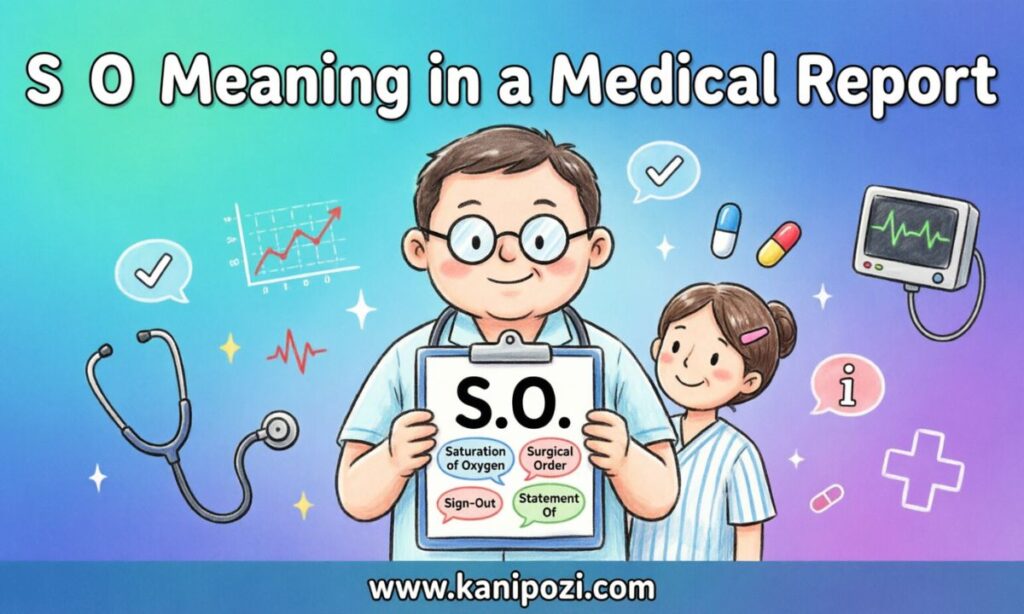
In medical and clinical contexts, “S.O.” can appear as an abbreviation for “Significant Other” in patient intake forms, mental health assessments, and social history documentation. Healthcare providers use it to ask about a patient’s support system without making assumptions about family structure or relationship type.
If you see S.O. in a medical report, it refers to the person listed as the patient’s primary relationship partner or emotional support contact — not a slang term.
S O Meaning on Snapchat
On Snapchat, the S O meaning is almost always shoutout. Users post “s/o to [username]” in Stories to highlight a friend, celebrate someone’s birthday, or give credit to another account. It’s warm, public, and community-driven.
Example Snap story: “s/o to @kayla for always coming through 💛”
S O Meaning on Instagram
Instagram uses the S O meaning both as shoutout (in captions and stories) and as the stylized emotional expression (in comments). When you see it in a comment section under a viral Reel, it’s usually expressing a reaction — sarcastic, admiring, or dramatically deadpan.
Caption use: “s/o to this city for never sleeping 🌆” Comment use: “s o obsessed with this look”
S O Meaning from a Guy
When a guy uses “s o” in a text or comment, it often carries playful sarcasm or understated agreement. It’s low-effort in the best way — not trying too hard, but communicating clearly. It signals he’s in on the joke or the vibe without needing to over-explain.
Example: “s o that game last night though” (meaning: that game was WILD and I have feelings about it)
S O Meaning from a Girl
When used by a girl, “s o” tends to land with more expressive weight — closer to genuine emphasis or soft drama. It can signal admiration, relatability, or playful exaggeration. It’s often used to amplify a feeling rather than undercut it.
Example: “s o in love with this song rn” (completely sincere, maximum feeling)
How Gen Z Uses S O Today

TikTok
On TikTok, the S O meaning appears mostly in comments and captions as a reaction tool. A viral video might get flooded with “s o unhinged,” “s o real,” or “s o her” — each one a compact emotional verdict. The spacing signals the comment was written with intent, not typed on autopilot.
Discord
In Discord servers — especially gaming and fandom communities — S O serves dual duty. It appears as shoutout (“big s/o to the mods”) and as expressive commentary during live events or heated game moments (“s o not okay with that ending”).
Gaming Chat
In gaming lobbies and live chats, S O works as rapid-fire acknowledgment. Players drop “s/o to the squad” after a win, or type “s o done” after a frustrating loss. It’s brief by necessity — no one pauses mid-match to write a paragraph.
Instagram Comments
Instagram comments are where “s o” thrives as pure aesthetic expression. Short, punchy, and tonally flexible, it fits Instagram’s visual-first culture where reactions need to be fast but feel genuine. The S O meaning in comments is almost always emotional emphasis — positive or sarcastic depending on context.
Text Messages
In personal texts, “s o” is often the digital equivalent of a dramatic pause. It’s used between friends who share a communication shorthand. If your friend texts “s o that conversation earlier,” you both already know the exact tone without any further explanation.
Real Chat Style Examples
Here’s how the S O meaning actually looks in real conversations across different platforms:
| Platform | Message | S O Meaning Used |
|---|---|---|
| Text | “My S.O. just surprised me with dinner 🥺” | Significant Other |
| “s/o to everyone who came to my show 🎸” | Shoutout | |
| TikTok comment | “s o not ready for this series to end” | Dramatic emphasis |
| Discord | “big s/o to the mods for keeping this place alive” | Shoutout |
| Snapchat | “s/o to my day ones, you know who you are” | Shoutout |
| Text | “that teacher was s o out of pocket today” | Exaggerated emphasis |
| Gaming chat | “s o done with this map, we’re switching” | Frustrated emphasis |
Similar Slang Comparison Section
Understanding the S O meaning is easier when you compare it to similar expressions that orbit the same emotional space.
Sooo
“Sooo” is the stretched-out cousin of “s o.” Where “s o” is minimalist and slightly detached, “sooo” is warm and enthusiastic. “Sooo tired” reads as relatable and casual. “S o tired” reads as dryly dramatic.
Fr
“Fr” (for real) emphasizes sincerity and agreement. It stamps a statement as genuine. “S o” emphasizes tone and feeling. They serve different functions — “fr” verifies, “s o” amplifies.
Deadass
“Deadass” means completely serious, no joke. It’s New York-rooted and carries weight. “S o” is lighter and more playful. “Deadass tired” is a direct statement. “S o tired” is still expressive but with more stylistic flair.
Ikr
“Ikr” (I know, right) is a solidarity marker — it validates what someone else said. The S O meaning as an expression is more self-directed. You use “ikr” to agree with someone; you use “s o” to express your own reaction.
Lol
“Lol” softens tone and adds humor. It’s nearly punctuation at this point. “S o” is weightier — it signals actual emotional investment, even if that investment is sarcastic. Replacing “lol” with “s o” in a message shifts the whole feel from casual to pointed.
Psychological and Social Meaning
Why does such a tiny formatting choice carry so much weight? Because online communication strips away voice, facial expression, and body language — all the tools humans rely on to read emotion. Slang like the stylized S O meaning fills that gap.
When someone spaces out “s o,” they’re performing a pause. They’re mimicking the way a person would draw out a word in speech to signal exaggeration or irony. It’s a typographic tone of voice.
Gen Z especially values these micro-expressions. They function as social signaling — a way of showing you understand the unwritten rules of digital communication. Using “s o” correctly in a comment thread signals cultural fluency. It says: I’m in the loop, I understand the vibe, and I can communicate in the shorthand of this space.
There’s also a psychological dimension to its ambiguity. The S O meaning is deliberately open to interpretation, which gives the user plausible deniability. If someone isn’t sure how a reaction will land, “s o interesting” works whether they mean it genuinely or ironically. That flexibility is a feature, not a bug.
When Not to Use This Slang
The S O meaning as an expressive slang term is not universally appropriate. Here’s when to leave it out:
- Professional emails or work communications — “s o not prepared for this meeting” might read as immature or disrespectful in a workplace context
- Formal written content — academic papers, cover letters, or official documents
- Conversations with people unfamiliar with internet slang — older relatives or professional contacts may misread the tone entirely as rudeness or sarcasm
- Sensitive or serious discussions — emotional conversations about grief, mental health, or conflict are not the right context for stylized slang expressions
- Customer service interactions — even in casual brand voice, “s o sorry about that” can feel like it’s minimizing a real concern
The rule of thumb: if you wouldn’t use a stretched-out “sooooo” in that context, don’t use “s o” either.
Is This Slang Still Trending in 2026?
Yes — but quietly. The S O meaning as an expressive tool is what slang researchers would call integrated slang: it doesn’t spike in Google Trends or go viral in a single week, but it lives as a permanent fixture in everyday digital communication.
In 2026, minimalist expressive typing is actually gaining ground over maximalist caps lock and emoji overload. Understated expression carries more cultural weight right now — and “s o” fits that mood perfectly. It’s the opposite of trying too hard.
The “Significant Other” and “shoutout” meanings are fully mainstream — they appear in news articles, brand social media posts, and even workplace communications without explanation. That’s the hallmark of slang that has fully arrived.
Pro Tips to Use S O Naturally
- Match the platform tone — “s o good” works in an Instagram comment; use “S.O.” for the significant other meaning in text messages with full context
- Don’t over-explain — using “s o” naturally means dropping it in without annotation; explaining it defeats the purpose
- Read the room first — check whether the conversation is already casual and playful before using expressive slang
- Use spacing intentionally — “so” and “s o” feel different; the space adds the dramatic pause, so don’t add it by accident
- Context is everything — “s o done” reads as tired/frustrated; “s o iconic” reads as admiring; same structure, completely different meaning
Common Mistakes
Mistake 1: Using “s o” in formal writing The stylized spacing works only in casual digital spaces. In professional contexts, write “so” normally.
Mistake 2: Confusing S/O (shoutout) and S.O. (significant other) The punctuation matters. S/O with a slash = shoutout. S.O. with periods = significant other. In lowercase with a space (“s o”) = expressive slang.
Mistake 3: Overusing it Like any slang, the S O meaning loses power with repetition. Use it when it fits naturally, not in every sentence.
Mistake 4: Forcing it in the wrong emotional register “S o” carries a cool, understated energy. Using it in genuinely urgent or serious situations makes the message feel tone-deaf.
Related Slang Words Mini Glossary
| Slang Term | Meaning | Example |
|---|---|---|
| S.O. | Significant Other | “Taking my S.O. to the airport” |
| S/O | Shoutout | “Big s/o to the whole crew” |
| Fr / Fr fr | For real (emphasis/agreement) | “That hit different fr” |
| Ngl | Not gonna lie | “Ngl, that was cringe” |
| Lowkey | Subtly, secretly | “Lowkey s o impressed” |
| Highkey | Obviously, openly | “Highkey obsessed with this” |
| Bet | Agreement/confirmation | “Bet, see you at 8” |
| Ikr | I know, right | “Ikr, s o out of nowhere” |
| No cap | No lie, genuinely | “S o good, no cap” |
| Deadass | Completely serious | “Deadass the best show ever” |
| Slay | Doing something excellently | “She s o slayed that look” |
| Mid | Average, mediocre | “The sequel was kinda mid” |
Frequently Asked Questions
What does S O mean in slang?
S O in slang means either “significant other” (romantic partner), “shoutout” (public acknowledgment), or is used as a stylized way of writing “so” to add dramatic emphasis or sarcasm in text.
What does S.O. mean in a relationship?
S.O. stands for Significant Other — a gender-neutral, inclusive term for a romantic partner that doesn’t specify gender, marital status, or relationship stage.
What does S/O mean on Snapchat?
On Snapchat, S/O almost always means “shoutout” — a public callout in Stories or captions to appreciate a friend, follower, or collaborator.
What does S/O mean on Instagram?
On Instagram, S/O means shoutout in captions and stories; in comments, the spaced “s o” is used as dramatic or sarcastic emphasis on a reaction.
Is S O rude or offensive?
Not inherently. The expressive “s o” is typically playful or sarcastic among friends. Context and tone determine whether it’s friendly or cutting.
Why do people put a space in “s o”?
The space mimics the stretched, drawn-out delivery of “sooo” in speech — it’s a visual tone marker that adds emphasis or irony without extra letters.
What does S O mean from a guy in text?
From a guy, “s o” usually signals low-key sarcasm, understated agreement, or playful exaggeration — communicating emotion without sounding too intense.
What does S O mean in a medical report?
In medical documentation, S.O. refers to Significant Other — used in patient intake forms and social history assessments to identify a patient’s primary relationship partner.
Is S O still used in 2026?
Yes. The S O meaning in all its forms remains in active, daily use across TikTok, Instagram, Discord, and text messaging in 2026.
How is “s o” different from “so”?
“So” is neutral. “S o” with a space signals intentional emphasis, irony, or emotional exaggeration — it’s a deliberate stylistic choice, not a typo.
Conclusion
The S O meaning is proof that the smallest details in digital language carry the biggest social weight. Whether you’re talking about your S.O. (significant other), giving a s/o (shoutout) to your followers, or dropping a loaded “s o unbelievable” in a comment thread — each version does something distinct. Each one communicates something a plain, unformatted word couldn’t quite capture.
In 2026, understanding slang like this isn’t just about being trendy. It’s about fluency in the language that billions of people use to connect, react, and express themselves online every single day. Now that you know the full picture of the S O meaning, you’ll catch every shade of it — from the genuine to the sarcastic to the tender — the next time it appears in your feed.